
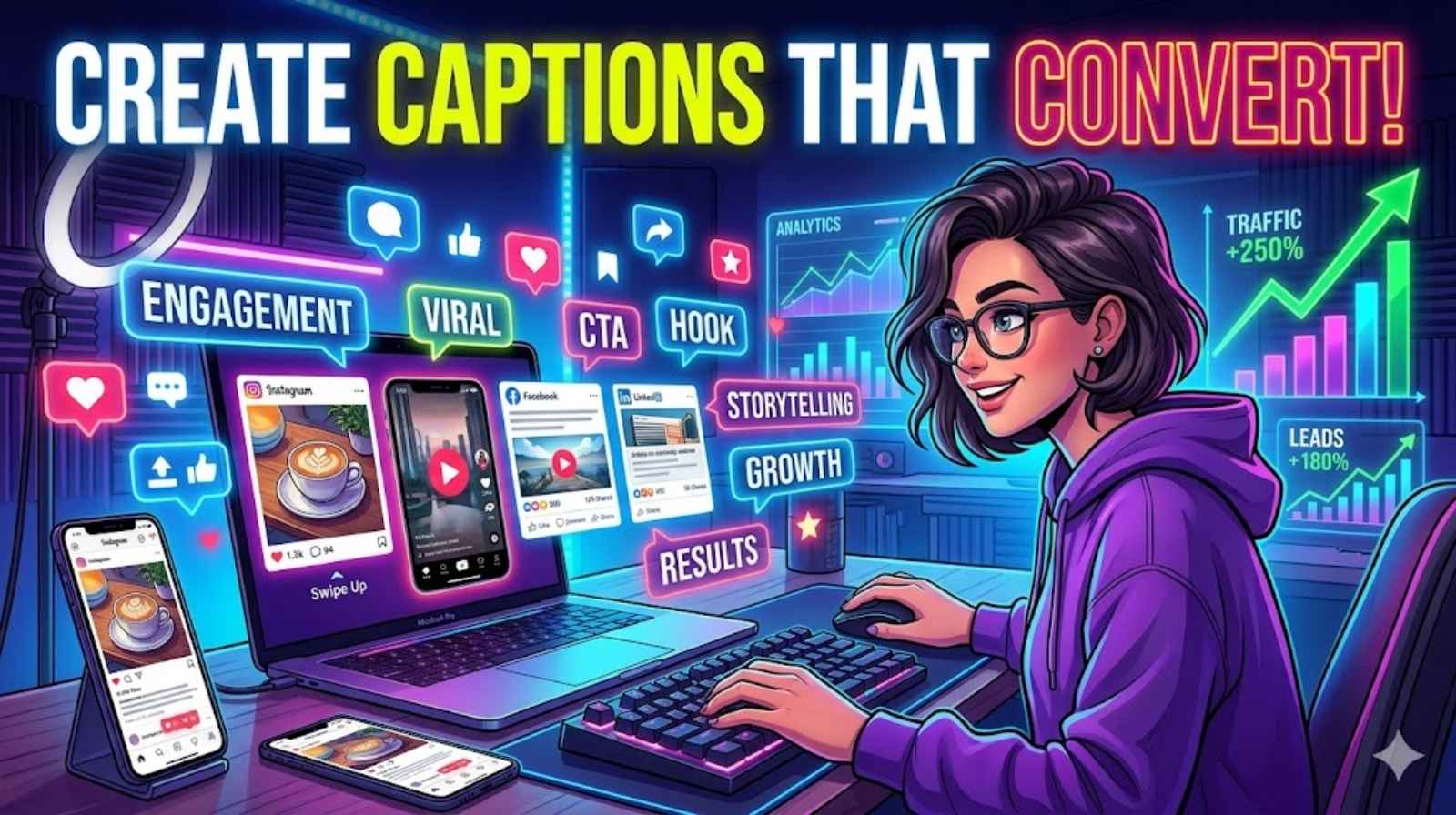
Social media moves fast. People scroll through hundreds of posts every day. Your image or video may catch attention for a second, yet your caption often decides whether someone clicks, comments, or buys. That is why learning how to create compelling social media captions matters more than ever. Strong captions build trust, create emotion, and increase engagement quickly.
Many brands struggle with weak captions. They post good visuals, yet the words feel dull or robotic. Smart businesses understand that engaging social media captions can turn casual viewers into loyal followers. A few carefully chosen words can increase shares, spark conversations, and improve conversions across every platform.
If you want to learn how to create compelling social media captions that actually work, this guide will help. You will learn proven caption writing tips, practical examples, powerful strategies, and real techniques used in successful social media copywriting campaigns. By the end, you will know exactly how to write social media captions that connect with audiences and drive action.
Why Social Media Captions Matter for Engagement and Conversions
Most people focus heavily on visuals. However, captions often do the real selling. A beautiful image may stop the scroll for a moment, yet captions explain the value behind the post. They create emotional connection. They also encourage people to interact.
Strong social media content writing improves trust because it sounds human. People respond to authenticity. When captions feel natural, readers stay longer and engage more often. This is one reason why brands invest heavily in social media marketing captions that feel personal rather than corporate.
Research from multiple marketing studies shows that posts with meaningful captions often receive higher engagement rates than posts with little or no text. Captions guide the audience toward action. They tell readers what to think, what to feel, and what to do next.
Here is a simple comparison table showing how captions influence performance:
| Caption Style | Audience Reaction | Result |
| Generic captions | Low emotional connection | Fewer comments |
| Storytelling captions | Stronger trust | Higher engagement |
| Question-based captions | Encourages replies | More conversations |
| CTA-focused captions | Clear direction | Better conversions |
A strong caption also strengthens your brand identity. Effective brand voice captions help people recognise your tone immediately. Some brands sound funny. Others sound inspirational or professional. Consistency matters because it creates familiarity.
“People rarely remember ordinary captions. They remember captions that make them feel something.”
How to Create Compelling Social Media Captions That Grab Attention
The first line of your caption matters enormously. If the opening feels boring, most people will continue scrolling. This is why smart marketers focus heavily on caption hooks and attention-grabbing captions.
The easiest way to grab attention is to trigger curiosity. Ask a surprising question. Make a bold statement. Challenge a common belief. Human brains naturally respond to unfinished information. That small curiosity gap encourages readers to continue.
For example:
- “Most brands ruin their captions in the first sentence.”
- “This simple caption trick doubled our engagement.”
- “You are probably making this social media mistake.”
These examples work because they create anticipation. They make readers want answers.
Another important strategy involves rhythm. Long blocks of text feel exhausting online. Short sentences improve readability. They also create momentum. Many successful catchy social media captions use a mix of short and longer sentences to keep readers engaged.
Emotion also plays a huge role. Readers connect with honesty and personality. This is why storytelling captions perform so well across social platforms. Stories make brands feel human. Instead of selling directly, they invite readers into an experience.
Consider this simple example:
“Three months ago, our engagement was terrible. We changed one caption strategy. Everything improved.”
That feels real. It feels relatable. Readers become curious because the story creates emotional investment.
Strong CTAs also matter. Many brands forget to tell people what to do next. Effective CTA for social media encourages interaction naturally.
Examples include:
| CTA Style | Example |
| Comment CTA | “Tell us your opinion below.” |
| Save CTA | “Save this for later.” |
| Share CTA | “Send this to a friend who needs it.” |
| Click CTA | “Read the full guide today.” |
Learning how to write captions with CTA can dramatically improve engagement rates over time.
How to Create Compelling Social Media Captions for Different Platforms
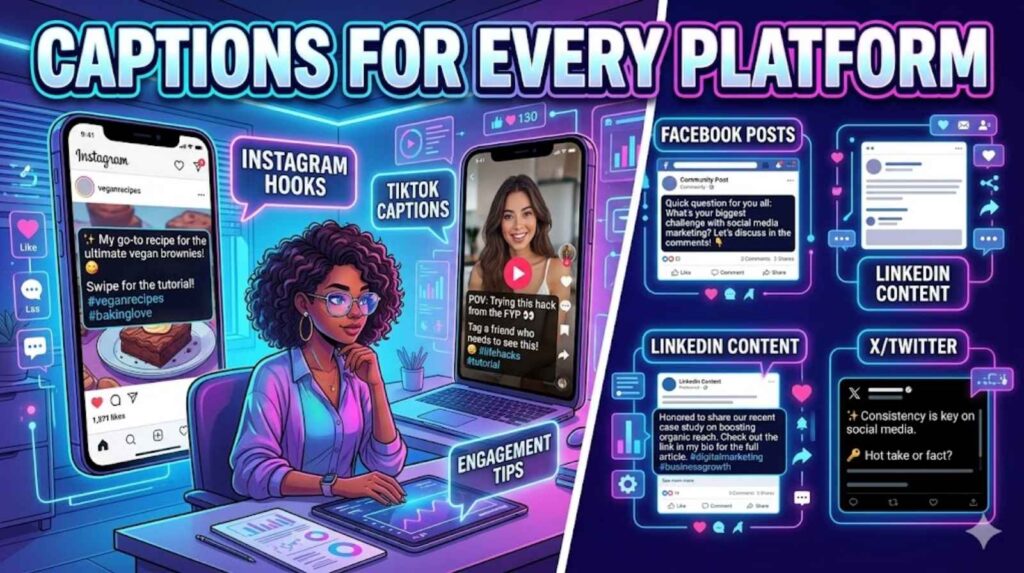
Every platform works differently. A caption that performs well on LinkedIn may fail completely on TikTok. Understanding platform behaviour is essential when learning how to create compelling social media captions.
Instagram Captions
Instagram thrives on visual storytelling and emotional connection. The best Instagram caption ideas feel authentic and conversational. People respond well to personal stories, humour, and relatable experiences.
Effective caption ideas for Instagram posts often begin with a hook before moving into storytelling. Readers want entertainment, inspiration, or useful advice. Strong engaging Instagram caption tips usually include short paragraphs, emojis used carefully, and a simple CTA.
Brands that master how to write captions for reels often use fast-paced, curiosity-driven wording because short-form video audiences have limited patience.
Facebook Captions
Facebook encourages community interaction. Good Facebook post captions often ask questions or invite discussion. Longer captions work better here than on some other platforms because Facebook users spend more time reading.
Successful Facebook captions frequently include personal stories, opinions, or relatable experiences. This style creates deeper conversation and stronger audience connection.
TikTok Captions
TikTok captions need speed and energy. Effective TikTok caption tips focus on curiosity, trends, and humour. Short captions usually perform best because viewers pay more attention to the video itself.
Many creators use viral caption ideas alongside trending sounds and challenges. Timing matters heavily on TikTok because trends change quickly.
LinkedIn Captions
LinkedIn audiences prefer professional value. Strong LinkedIn post captions focus on lessons, industry insights, leadership experiences, and business storytelling.
People engage with practical advice and authentic career experiences. The best captions combine professionalism with relatability.
How to Create Compelling Social Media Captions Using Simple Words
Simple writing wins online. Complex wording often confuses readers or slows them down. Strong captions feel easy to read because they sound natural.
Many beginners think complicated vocabulary makes them sound smarter. In reality, clarity performs better. Simple language improves understanding immediately. That is why professional marketers focus heavily on writing better captions using direct wording.
For example:
| Weak Caption | Better Caption |
| “Utilise innovative strategies” | “Use smarter strategies” |
| “Facilitate engagement opportunities” | “Start conversations” |
| “Maximise audience interaction” | “Get more comments” |
The second examples feel more human. They also feel easier to process quickly.
Another powerful strategy involves conversational writing. Imagine speaking directly to one person instead of a large audience. This approach makes captions feel warmer and more personal.
Strong social media writing tips also encourage removing unnecessary filler words. Every sentence should add value. Every word should support the message.
“Clear captions outperform clever captions when readers feel confused.”
Best Caption Formulas for Social Media Success
Professional marketers rarely write randomly. They use proven caption formulas because structure improves consistency and engagement.
One of the most effective methods is the AIDA formula.
| Step | Purpose |
| Attention | Grab interest quickly |
| Interest | Build curiosity |
| Desire | Show benefits |
| Action | Encourage action |
Here is a simple example:
“Still struggling with low engagement? Most brands focus only on visuals. Strong captions change everything. Try these content engagement tips today.”
Another highly effective approach uses storytelling. Strong social media storytelling captions follow a simple structure:
- Introduce the situation
- Present the challenge
- Reveal the solution
- End with a lesson or CTA
This format works because stories feel emotional and memorable.
Question-based captions also improve interaction significantly. Asking thoughtful questions encourages comments and discussions naturally. This is one reason why many brands use audience engagement captions regularly.
How to Write Catchy Captions That Match Your Brand Voice
Consistency builds trust. If your brand sounds funny one day and overly formal the next, audiences feel confused.
Strong brand voice captions maintain a consistent tone across every platform. Some brands sound motivational. Others sound playful or educational. The key is maintaining clarity and personality.
Humour works well when it feels natural. Forced jokes usually fail because audiences notice immediately. Relatable humour performs best because it mirrors everyday experiences.
For example:
“Spent 30 minutes creating the perfect post. Forgot the caption completely.”
That feels human. Many people relate to it instantly.
Professional brands often succeed by combining expertise with warmth. Readers want useful information, yet they also want personality.
How to Create Compelling Social Media Captions That Increase Engagement
Engagement grows when captions encourage participation. Readers enjoy content that makes them feel involved.
Questions work extremely well because they invite opinions. Instead of simply sharing information, ask readers what they think.
Examples include:
- “What is your biggest social media challenge?”
- “Would you try this strategy?”
- “Which caption style works best for you?”
Curiosity also drives interaction. Humans naturally seek answers. Captions that hint at valuable information often increase clicks and comments.
Another strong strategy involves social proof. Mentioning real results improves credibility.
For example:
“This caption strategy increased our engagement by 47% in three weeks.”
Specific numbers feel believable and persuasive.
Formatting also affects readability. Large text blocks overwhelm readers. Breaking captions into smaller sections improves scanning and comprehension.
This is especially important for mobile users because most people consume social media content on phones.
Creative Caption Ideas for Businesses, Creators, and Brands
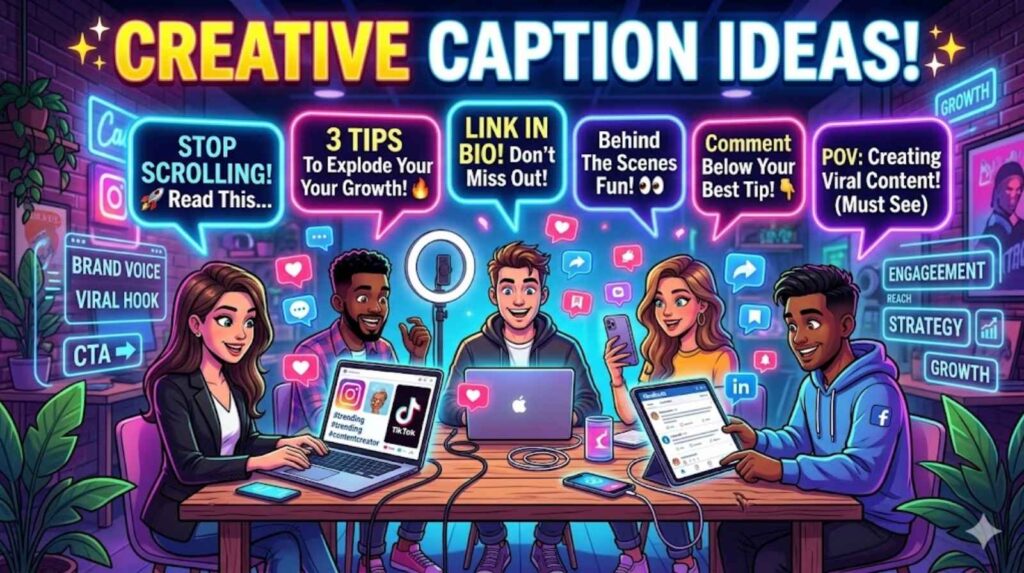
Fresh ideas keep audiences interested. Repetitive captions quickly lose impact.
Businesses often benefit from educational captions because helpful content builds trust. Sharing quick tips or industry insights positions brands as reliable experts.
Content creators frequently use behind-the-scenes storytelling because audiences enjoy authenticity. Showing the process behind the final product creates emotional connection.
Here are several effective creative caption ideas:
| Caption Type | Example |
| Behind-the-scenes | “Here is what happened before the final shoot.” |
| Educational | “Three mistakes hurting your engagement right now.” |
| Motivational | “Small daily improvements create massive results.” |
| Promotional | “Limited spaces available this week.” |
Strong marketing captions combine emotion, value, and clarity. They avoid sounding overly sales-focused while still encouraging action.
Common Mistakes to Avoid When You Create Compelling Social Media Captions
Many brands damage engagement by making avoidable mistakes.
One common issue involves overly long captions with no structure. Readers feel overwhelmed when text appears dense and unorganised.
Another major problem involves sounding robotic. Generic phrases like “We are delighted to announce” feel cold and corporate. Human writing performs better because it feels relatable.
Weak CTAs also reduce performance. Readers need guidance. Without direction, many simply scroll away.
Excessive hashtags create another issue. Too many hashtags make captions look cluttered and spammy. Clean formatting improves professionalism and readability.
Many beginners also focus too heavily on selling. Constant promotion pushes audiences away. Good captions provide entertainment, education, inspiration, or emotional connection before asking for action.
Best Tips for Learning How to Create Compelling Social Media Captions Quickly
Improving caption writing takes practice. However, small habits speed up progress significantly.
Studying successful brands helps enormously. Analyse high-performing posts carefully. Notice how they structure hooks, storytelling, and CTAs.
Saving strong examples also improves creativity. Many marketers build swipe files filled with successful caption examples and ideas.
Daily writing practice matters too. Writing consistently strengthens clarity and confidence over time.
Tracking analytics is equally important. Metrics reveal what audiences actually enjoy. Pay attention to:
| Metric | What It Shows |
| Comments | Conversation quality |
| Shares | Content value |
| Saves | Long-term usefulness |
| Clicks | Conversion strength |
Understanding these signals helps improve future captions more effectively.
Tools That Help You Write Better Social Media Captions
Several tools improve effective social media copywriting.
Grammar tools help identify awkward phrasing and readability issues. Scheduling platforms improve consistency by allowing advanced planning.
AI tools can also generate ideas quickly. However, human editing remains essential. Audiences still prefer authenticity and emotional connection over robotic wording.
The best results usually come from combining technology with personal creativity.
Real Examples of High-Converting Social Media Captions
Weak captions often sound vague:
“Check out our new product.”
Strong captions feel specific and emotional:
“We created this tool to save busy creators hours every week.”
The second version explains value immediately. It also feels more personal.
Another example:
| Weak Caption | Better Caption |
| “New blog live now.” | “Struggling with low engagement? This guide explains what actually works.” |
| “Buy today.” | “Ready to grow faster? Start improving your captions today.” |
High-performing captions usually contain three key elements:
- Emotional relevance
- Clarity
- Action-oriented wording
These factors consistently improve social media engagement and conversions.
Final Thoughts
Learning how to create compelling social media captions takes time, practice, and experimentation. However, strong captions can completely transform your results online.
Great captions do more than fill empty space beneath a post. They create emotion, build trust, encourage interaction, and drive conversions. The best captions sound human because people connect with authenticity.
Focus on clarity first. Use emotion naturally. Add strong hooks and purposeful CTAs. Most importantly, write for real people rather than algorithms.
As you continue improving your social media caption strategy, you will notice stronger engagement, better audience relationships, and higher conversion rates across every platform.
Frequently Asked Questions
How do you write engaging social media captions?
Start with a strong hook, keep the language simple, add emotional value, and include a clear CTA. Strong engaging social media captions encourage interaction naturally.
What are the best captions for social media posts?
The best captions for social media posts feel authentic, relatable, and easy to understand. Storytelling and curiosity-driven captions often perform well.
How can captions increase engagement?
Captions improve engagement by encouraging comments, shares, saves, and clicks. Strong captions that boost interaction create emotional connection and audience participation.
What makes a caption go viral?
Strong how to create viral captions strategies usually combine emotion, timing, trends, and relatability. Viral captions also encourage sharing.
How long should social media captions be?
Caption length depends on the platform. Instagram and LinkedIn allow longer storytelling captions, while TikTok often performs better with shorter text.
What is the best CTA for social media captions?
The best CTA feels natural and specific. Examples include asking questions, encouraging saves, or directing readers to click a link.
How do brands create high-converting captions?
Brands create high-converting captions by understanding audience emotions, solving problems, and guiding readers toward action.
What are the best caption writing tips for beginners?
Focus on clarity, practise daily, study successful posts, and learn caption writing for beginners through testing and experimentation.